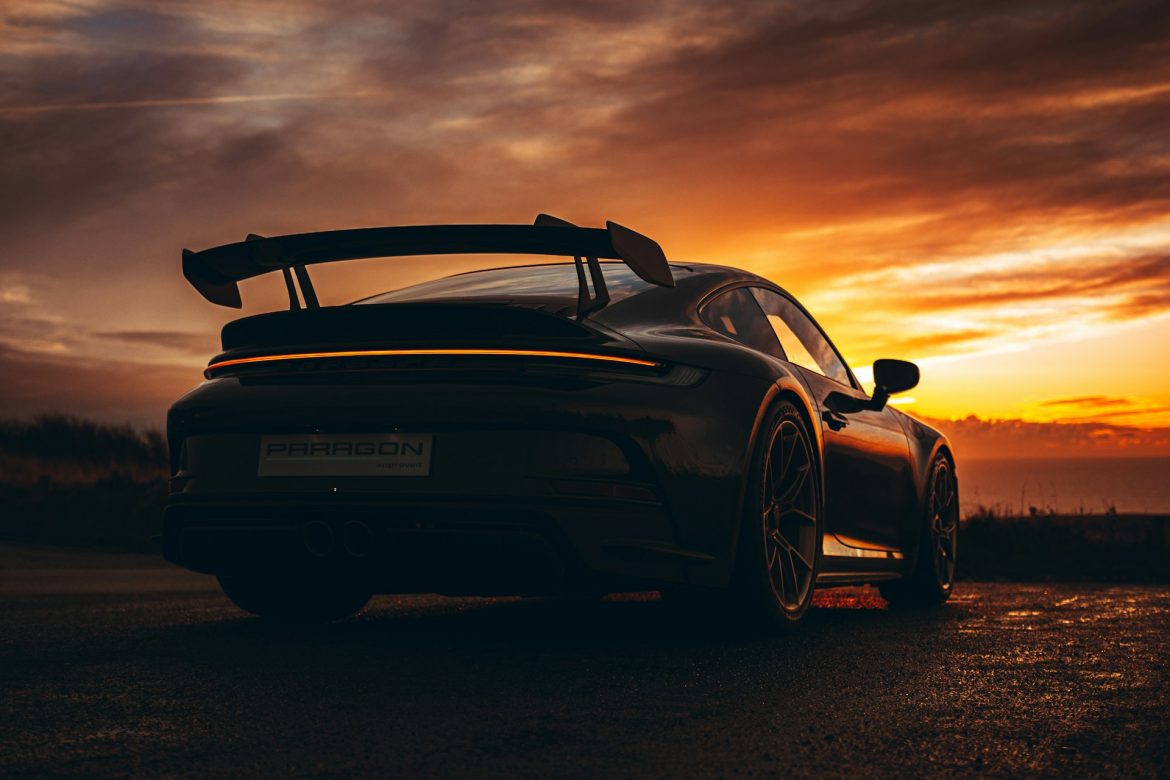
The Porsche 911 Dakar needs little introduction. Honestly, it represents the most radical reinterpretation of the factory-built, road-legal 911 rulebook since Weissach’s engineers grabbed a 996-generation Supercup race car and shoehorned it into public life nearly 25 years ago. That little experiment birthed the now-iconic GT3.
But where the GT3 worships the tarmac, the Dakar looks off the beaten path, drawing its bloodline from an entirely different breed of motorsport. Back in 1984, Porsche stunned the world by conquering the 7,500-mile Paris-Dakar Rally in a heavily mutated G-Series 911. Known as the 953, it packed a 270-litre fuel tank, a manually locking centre diff, and nearly 300mm of wheel travel, all while keeping the road car’s standard 3.2-litre flat-six tucked over the rear axle. It was the first dedicated sports car to survive the world’s most gruelling rough-road race, paving the way for the legendary Rothmans-liveried 959.
Today, that madness is celebrated by the new 911 Dakar, limited to a global run of just 2,500 units.
A Mechanical Rebel in a Broad Family
This unusual and intensely special model lands at a time when Porsche is expressing itself with borderline reckless abandon. The latest GT3 RS has effectively rewritten the physics of track-day grip, while the brilliant 911 S/T blends hardcore RS precision with the road manners of a standard Carrera.
Against that backdrop, the Dakar is the wildest swing of them all. Based heavily on the Carrera 4 GTS driveline, it immediately looms over the rest of the range. Black plastic wheel-arch cladding, underbody armour, and an extra 50mm of ground clearance give it a fiercely alternative stance. Hit the hydraulic actuators in the suspension struts, and the car lifts an additional 30mm. At 191mm of total ground clearance, it easily eclipses its closest rival, the Lamborghini Huracán Sterrato (171mm), and even edges past Ferrari’s Purosangue SUV.
The 911 Range at a Glance
| Model | Power | Starting Price |
| Carrera | 380 bhp | £97,000 |
| Carrera 4 | 380 bhp | £103,000 |
| Carrera T | 380 bhp | £107,700 |
| Carrera S | 444 bhp | £110,000 |
| Carrera 4S | 444 bhp | £116,000 |
| Carrera GTS | 473 bhp | £122,000 |
| Carrera 4 GTS | 473 bhp | £128,000 |
| GT3 | 503 bhp | £146,400 |
| Turbo | 573 bhp | £159,000 |
| Dakar | 473 bhp | £173,000 |
| Turbo S | 641 bhp | £180,600 |
| GT3 RS | 518 bhp | £192,600 |
| Sport Classic | 542 bhp | £214,200 |
| S/T | 518 bhp | £231,600 |
You can keep the Dakar perched on those hydraulic stilts at speeds up to 106mph in its bespoke Rallye and Offroad modes—though you’d need genuine courage to test that limit on a dusty trail.
Naturally, the suspension setup features considerably lower spring rates and much longer travel than standard 911 fare. Yet, it retains top-tier hardware: semi-active dampers, active anti-roll bars, and rear-axle steering. This translates into something deeply unexpected. While the all-terrain tyres and ride height make it an unstoppable weapon on muddy tracks, they also turn the Dakar into a wonderfully compliant, engaging road car. Less outright grip and more pronounced body roll equal accessible, everyday fun.
The Dakar Verdict: 8/10
The Good: Unquestionably the finest ride quality of any 992-generation Porsche. The reduction in grip paired with more generous body movements makes its performance highly exploitable. It packs genuine off-road ability and looks absolutely the part doing it.
The Bad: Those chunky all-terrain tyres inevitably diminish dynamic steering transparency. The cabin noise is noticeably louder than a standard Carrera, and the rear roll-cage severely inhibits daily practicality. Top speed is capped, which will realistically only bother the Autobahn crowd.
The Digital Illusion
This unapologetic pursuit of tactile emotion isn’t ring-fenced for Porsche’s combustion stalwarts. Over in the electric division, the boffins at Stuttgart are pulling off a psychological masterstroke that proves they care just as much about the driver’s pulse as they do about sheer acceleration.
If the Dakar tackles the physical world with mechanical brute force, the new Taycan tackles the digital realm with outright illusion.
Press the right button in the new model year Taycan, and you’ll scarcely believe your eyes. The digital dashboard suddenly conjures a rev counter. The needle trembles faintly, perfectly mimicking the idle of a restless combustion engine waiting to be unleashed. Bury the throttle, and the sensory deception deepens. The needle sweeps aggressively towards the redline, accompanied by sharp, deliberate jolts that thoroughly convince your brain the car is hooked up to a razor-sharp dual-clutch gearbox.
Welcome to E-Shift.
Porsche has essentially engineered the sterility out of the EV experience. Pull the paddles behind the GT steering wheel—left to drop a cog, right to grab the next—and you are suddenly directing the drivetrain just like the old days. Initiate Launch Control in the Turbo GT, and you’ll feel eight distinct, concussive shifts punch through the chassis as you hurtle past 300 km/h.
It doesn’t stop there. The software artificially simulates engine braking on lift-off. Yellow shift lights urge you to pull the paddle, and if you clumsily barrel past the simulated 7,500 rpm redline, you’ll hit a digital limiter that brutally stutters the power, publicly shaming you for missing your shift. The sheer absurdity of it all is brilliant, especially considering the electric motors are actually spinning seamlessly at over 16,000 rpm, entirely oblivious to the concept of gear ratios or power interruption. And the noise? Synthesised entirely through the speakers rather than echoing out of tailpipes.
But frankly, the artifice doesn’t matter. This isn’t about mechanical necessity; it’s about theatrical brilliance.
Electric powertrains offer immense, unrelenting pace, but they inherently lack a heartbeat. E-Shift bridges that gap for petrolheads flirting with electrification. Activated via a subtle blue button on the steering wheel—and dialled up to full-fat manual mode with a quick twist of the drive selector—it fundamentally alters the car’s character. A Taycan previously felt as brutally efficient and clinically cold as a surgical operating theatre. Now, it’s a sweaty, pulse-spiking session at a high-intensity gym. Between monitoring the apex, glancing at the rev counter, and waiting for the shift lights, it genuinely raises your temperature and brings a bead of sweat to the forehead.